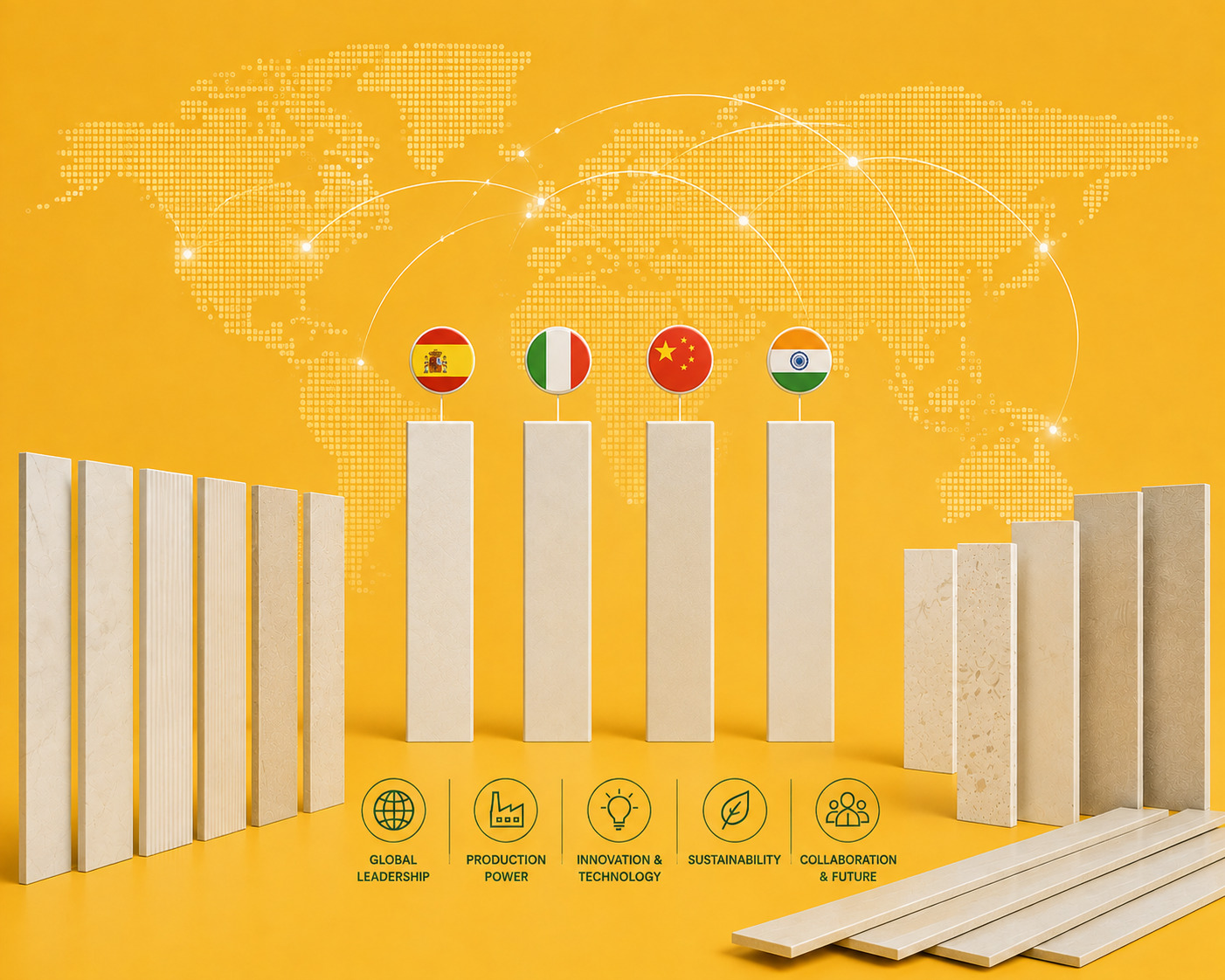
The global ceramics industry produces more than 15 billion m² per year. Four major ceramic clusters — Castellón, Sassuolo, Foshan and Morbi — account for 80% of global production and set the sector's technological, regulatory and competitive pace. Their internal dynamics and mutual relationships are shaping the map of the industry's future.
European regulatory pressure (CBAM, emissions regulations) together with India’s rapid manufacturing expansion and China’s technological leadership are transforming the global playing field. Castellón and Sassuolo must redefine their positioning through quality, technology and design. The key question is no longer who produces the most, but who sets the standards.
This session brings together leading voices from each of these clusters to discuss their perspectives on competitiveness, sustainability, digitalisation and the geopolitics of ceramics. Through real-world data, diverse viewpoints and open discussions, this session will explore how the industry is likely to evolve over the next decade.
The Challenge
Competition or global convergence? European regulatory pressure, India’s manufacturing growth and China’s technological dominance are reshaping the industry. The real question is not who manufactures the most, but who defines the standards that will govern the future of ceramics.
Session Objective
To bring together leading representatives from the world's main ceramic clusters and examine their perspectives on competitiveness, sustainability, digitalisation and ceramic geopolitics, providing a forward-looking vision of the industry based on real data, contrasting viewpoints and an honest debate about the challenges and opportunities of the coming decade.