Digitalisation in the ceramic industry must definitively move beyond the superficial phase based on the simple incorporation of software, sensors or isolated dashboards. The real challenge lies in advancing towards deep industrial digitalisation, fully connected to the production process, the product, quality control, maintenance, energy efficiency, design and the customer.
This track must place data at the centre of industrial competitiveness. The goal is not to digitalise for the sake of trend, but to transform the information generated by the factory into a real tool for making better decisions, reducing costs, anticipating issues, improving quality and increasing production flexibility.
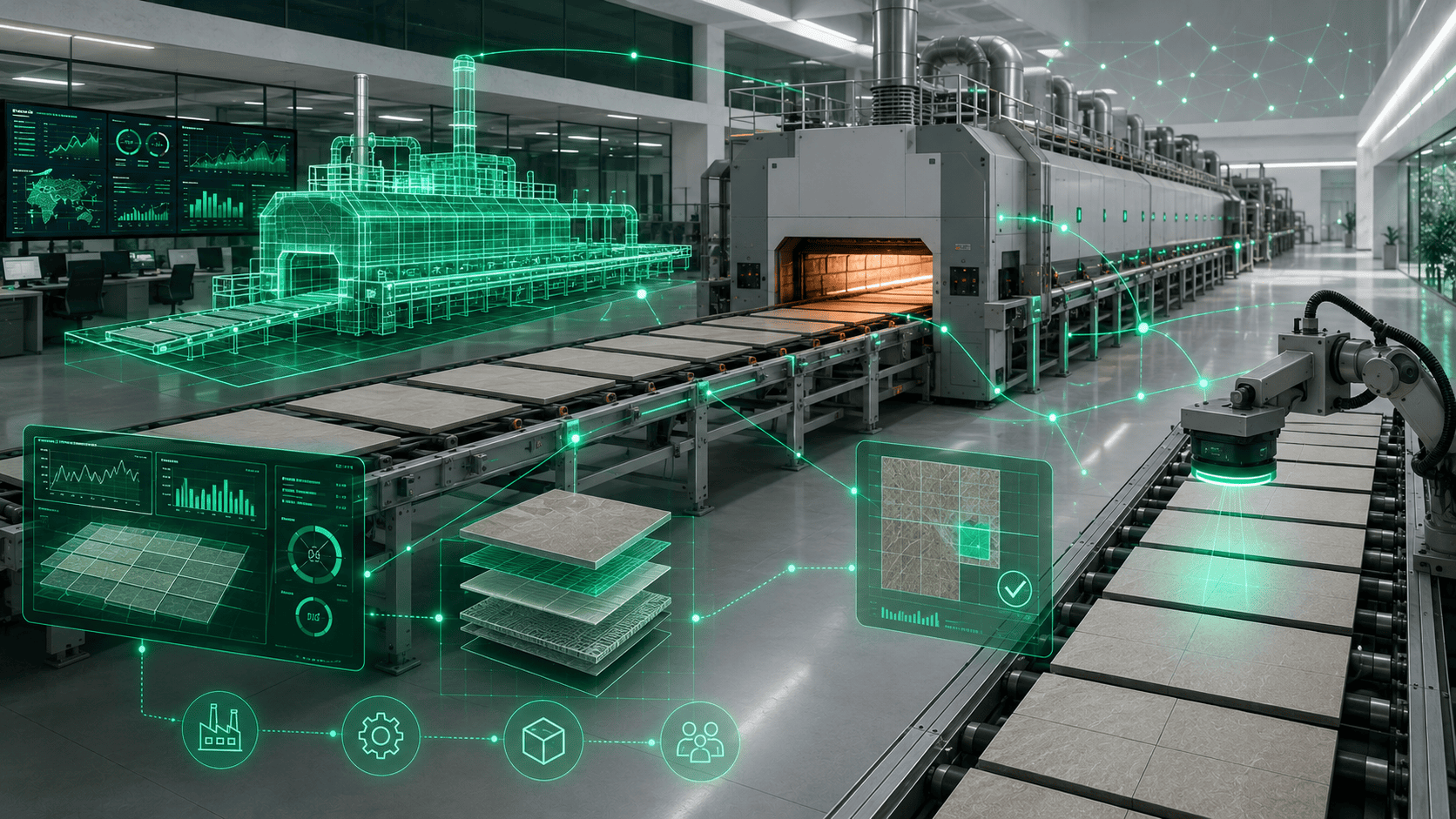
One of the most relevant areas will be the development of digital twins applied to kilns, production lines, entire plants and ceramic products. The ability to simulate processes, anticipate deviations, optimise firing curves or detect defects in advance can represent a significant competitive advantage for companies capable of integrating ceramic expertise, industrial data and predictive models.
Artificial intelligence must be approached as an applied tool, not as a generic concept. Its potential in quality control, predictive maintenance, energy optimisation, product formulation, surface design, production planning and commercial analysis is enormous. However, it requires reliable data, integration with existing systems and a deep understanding of the ceramic process.
Another key aspect will be the integration of process–product–customer data. The ceramic industry generates large volumes of information, yet in many companies this data remains fragmented across departments, systems and technology providers. Real transformation will occur when data from raw materials, manufacturing, quality, logistics, sales, claims and market behaviour can be connected to generate actionable knowledge.
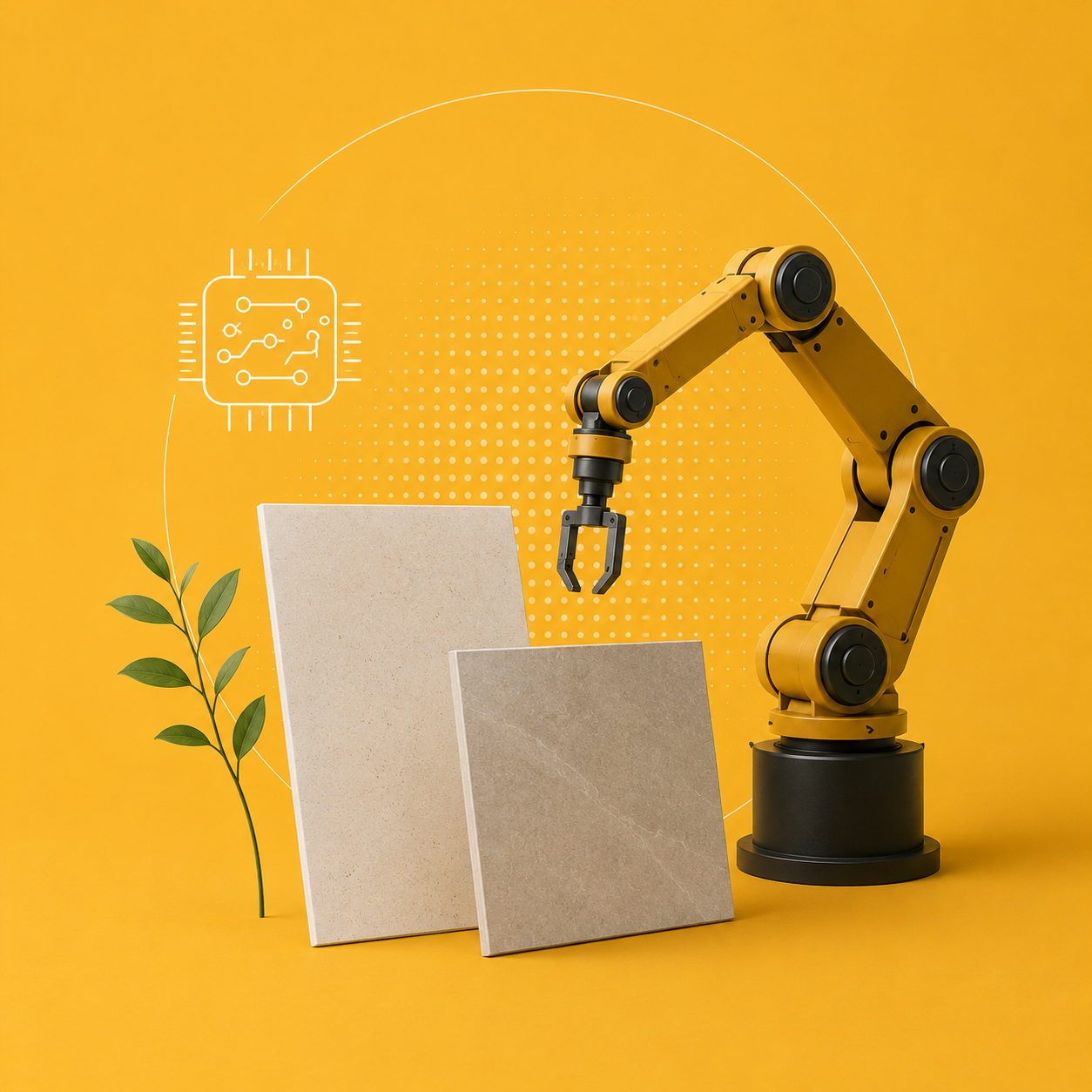
Digitalisation must also address industrial traceability, advanced automation, the sensorisation of critical assets, robotics, computer vision and decision-support systems. All these elements will enable the transition towards more efficient and flexible plants, with less reliance on non-systematised individual experience.
Both industrial and corporate cybersecurity will be another essential pillar. As factories become increasingly connected, risks also grow. The protection of data, control systems, industrial networks and intellectual property becomes a fundamental condition for any serious digitalisation strategy.
Finally, data governance will also be addressed — a critical issue in industrial environments full of machines that continuously measure every aspect of operations. The focus will be on analysing the most effective ways for companies to manage, structure and extract value from this data.